Can we still think long term in a world run on KPIs?
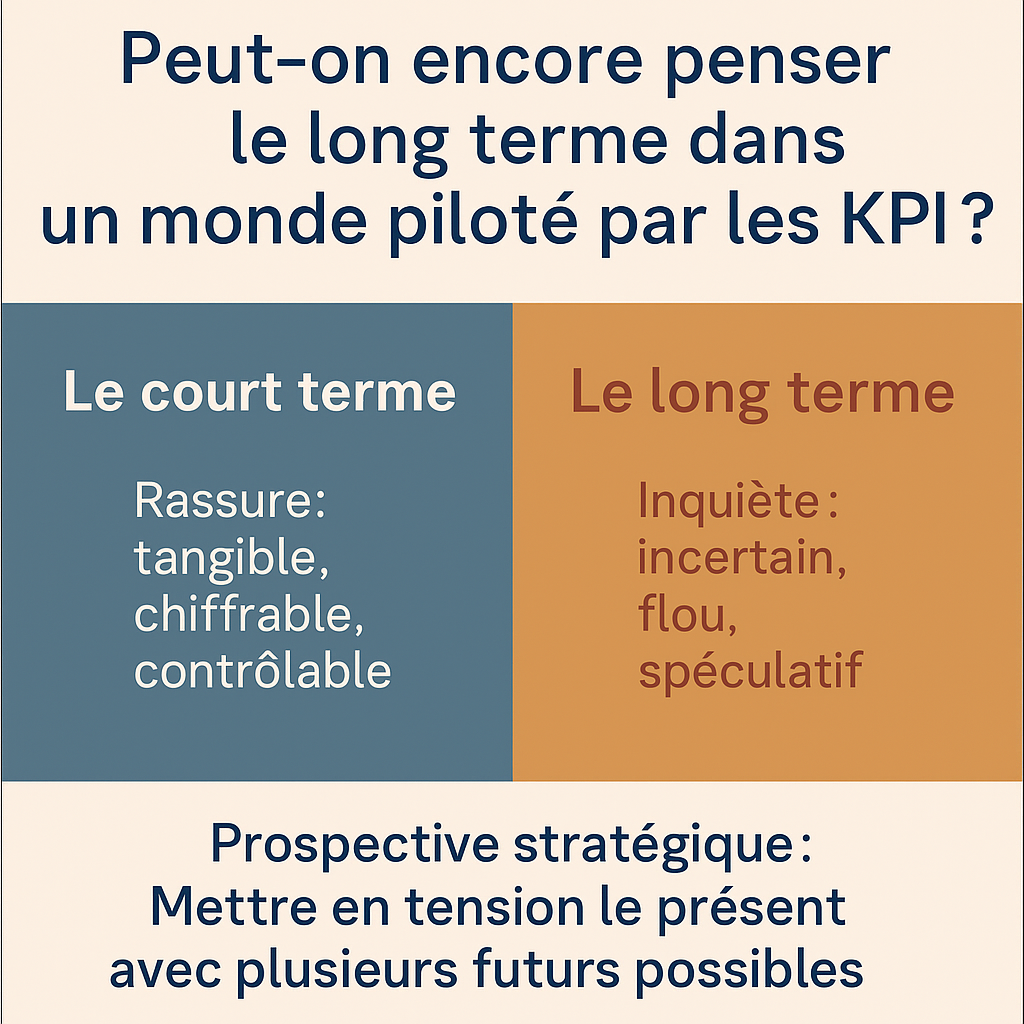
Reconciling immediate performance with strategic direction.
In a large company, as in a large international institution, every decision is weighed, calibrated, validated. Every initiative is indexed to quarterly objectives, dashboards and measurable returns on investment. And yet, all around, weak signals multiply: climate disruption, technological rupture, geopolitical tension, new societal expectations. Reality accelerates — while strategy shortens.
The short term reassures: it is tangible, quantifiable, controllable. But by looking only at what we know how to measure, we stop seeing what actually matters.
The long term unsettles: it is uncertain, blurred, speculative. Yet it is what determines our capacity to endure, to anticipate, to transform.
Working with public and private organisations in unstable environments — rethinking industrial policy, adapting an investment model, arbitrating priorities under constraint — one thing becomes clear: the answer is not to choose between performance and vision. It is to articulate the two.
This is where strategic foresight becomes decisive. It does not claim to predict, but to put the present in tension with several possible futures. It aligns today’s decisions with tomorrow’s conditions for success. It turns uncertainty into a source of differentiation.
Maintaining a long-term roadmap is not daydreaming. It allows teams to arbitrate, to prioritise, to resist the succession of urgencies. It gives leaders a robust course through turbulence.
What if the real audacity were to reclaim the right to think five years ahead? Not in order to dream, but in order to act better, now.